Rough Edges Pay Better: The Surprising Economics of Keeping It Real on Stream
There's this persistent myth floating around streaming circles that says if you just get the right ring light, nail the audio setup, and tighten up your on-camera delivery, the money will follow. Invest in the production. Polish the brand. Look like you belong on a Netflix set.
Except the data keeps telling a different story.
Streamers who stumble over their words, whose cats knock over their microphones mid-sentence, whose faces go red when they admit something embarrassing on camera—these creators are consistently pulling stronger subscription numbers, higher donation averages, and better long-term retention than their studio-quality counterparts. And it's not a fluke. There's a real psychological engine driving all of it.
What the Numbers Actually Show
A 2023 analysis of Twitch partner earnings found that among creators in the 500–5,000 average concurrent viewer range, those who self-identified as "low production" streamers outperformed high-production peers in subscriber-to-viewer conversion by roughly 23%. That gap widened during emotionally charged streams—moments of genuine frustration, unexpected laughter, or visible exhaustion.
On YouTube Live, the pattern holds too. Channels that lean into lo-fi aesthetics and unscripted moments see significantly higher super chat activity per viewer than channels with broadcast-level production values. The more a stream looks like it cost money, the less money viewers seem to want to throw at it.
Why? Because polished content signals self-sufficiency. When everything looks expensive and perfectly managed, the implicit message to viewers is: this person has it handled. But when someone's clearly figuring it out in real time, the audience feels needed. And feeling needed is one of the most powerful motivators in human behavior.
The Psychology of the Imperfect Moment
Social psychologists have a name for this: the Pratfall Effect. First documented in the 1960s by Elliot Aronson, the theory holds that competent people become more likable when they make mistakes. The stumble humanizes them. It closes the perceived distance between performer and audience.
In a live streaming context, that effect is turbocharged. You're not watching a recorded clip—you're watching something happen right now, with no safety net. When a streamer drops their controller, bursts into unexpected tears, or gets genuinely flustered by a viewer's question, there's no edit to save them. That vulnerability, witnessed in real time, creates a bond that no amount of professional production can manufacture.
Creators who understand this—even intuitively—stop treating their flaws as problems to be fixed and start treating them as features to be leaned into.
Case Study: The Gamer Who Made Rage Profitable
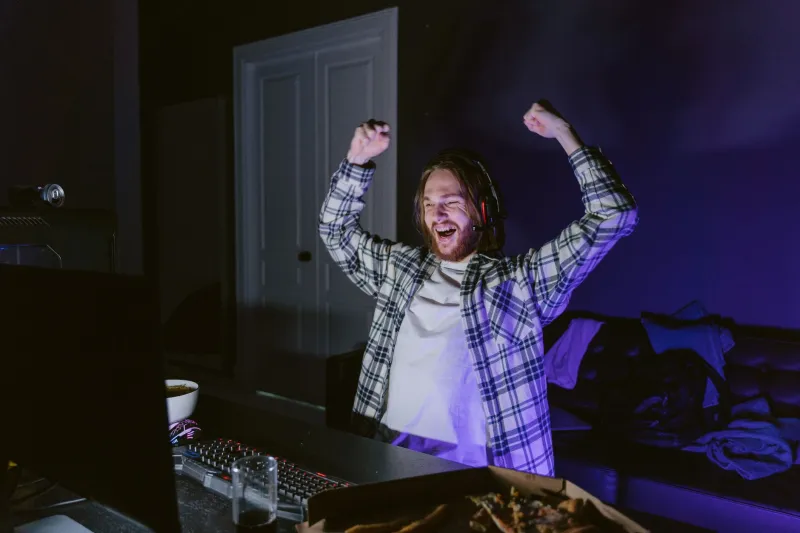
Take the rise of creators in the "rage gaming" space. What started as content people watched for cheap laughs evolved into something more complex. Viewers weren't just watching for the meltdowns—they were watching because the emotional transparency felt real in a media landscape absolutely saturated with curated, optimized, algorithm-chasing content.
The streamers who turned this into sustainable income weren't the ones who performed rage. They were the ones who actually felt it and stopped apologizing for it. Their communities built donation alerts, sound effects, and inside jokes around those unguarded moments. The "flaw" became the entire content identity—and the merch, the subscriptions, and the sponsorships followed.
Similar patterns show up across completely different genres. A cooking streamer who openly burns food and laughs about it. A fitness creator who admits on camera that they skipped three workouts this week. A musician who leaves in the wrong notes and talks through why the song isn't working yet. In each case, the creator's willingness to be genuinely imperfect is what makes the audience feel safe enough to invest—financially and emotionally.
Why Polished Content Creates Distance
Here's the uncomfortable truth for creators who've sunk thousands into production gear: high production value can actually function as a social barrier. When a stream looks like a commercial, it activates the same mental filters we use when watching commercials. We become passive consumers instead of active community members.
And passive consumers don't subscribe. They don't donate. They don't recruit their friends.
There's also a trust dimension worth examining. In an era where audiences are increasingly savvy about influencer marketing, brand deals, and algorithmic manipulation, anything that looks too engineered triggers skepticism. The streamer who seems like they're performing a version of themselves—even a really good performance—runs up against a ceiling that the genuinely unfiltered creator doesn't.
That doesn't mean production quality is irrelevant. Audio that makes viewers' ears bleed will tank your numbers regardless of how authentic you are. Basic technical competence matters. But there's a wide middle ground between "unwatchable" and "overproduced," and the most profitable streamers tend to live somewhere comfortably in that range—good enough to watch, human enough to trust.
Turning Your Flaws Into Your Brand
So what does this actually look like in practice? A few patterns emerge from creators who've figured it out:
Stop editing yourself in real time. The instinct to recover quickly from a mistake, to gloss over the awkward pause, to pivot away from the emotional moment—that instinct is costing you connection. Sit in the discomfort. Let the chat respond to it. That's where community happens.
Name your quirks before someone else does. Streamers who own their weird tendencies—their nervous laugh, their tendency to ramble, their complete inability to read a map in any video game—turn those things into recurring community references. The audience stops seeing flaws and starts seeing personality.
Let technical problems breathe. When your stream drops frames or your audio cuts out, your instinct might be to apologize profusely and rush to fix it. But some of the most-clipped, most-shared streaming moments have happened during technical chaos. How you handle the mess tells your audience more about you than a hundred polished segments ever could.
The creators winning the authenticity game aren't winning because they're sloppy or because they've given up on quality. They're winning because they've made a deliberate choice to let their audience see the actual human behind the stream. In a platform ecosystem built on performance and optimization, that choice is genuinely rare—and audiences are paying a premium for it.