Why Your Phone Lights Up at 3 AM and You Actually Answer: The Science of the Surprise Stream
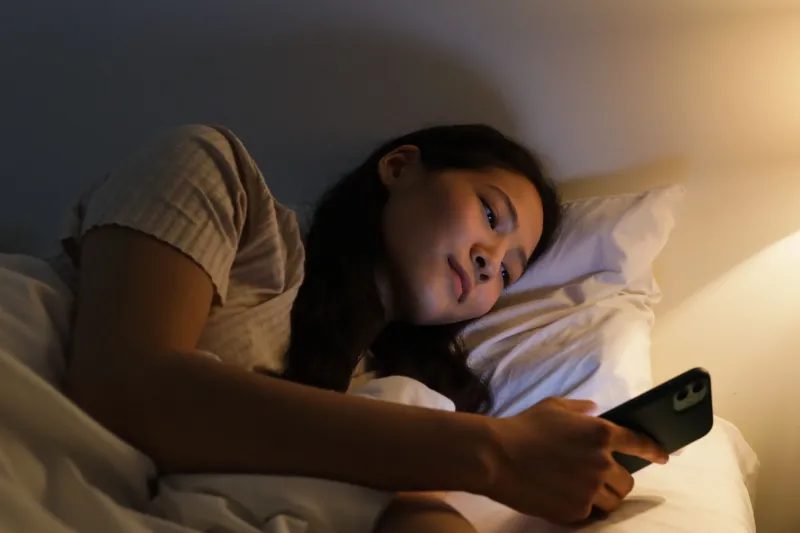
You've got work in five hours. You were asleep. Your phone buzzes with a notification — your favorite streamer just went live. You know you should put it down. You open the app instead.
You're not alone. You're not even unusual. You're part of a pattern that's reshaping how live entertainment works, and it has almost nothing to do with the content itself.
The Scheduled Stream Problem Nobody Talks About
Every piece of standard creator advice says the same thing: be consistent, stick to a schedule, train your audience to expect you. And that advice isn't wrong, exactly. Consistency builds habit, and habit builds audience retention over time.
But here's what the consistency gospel quietly ignores: predictability kills urgency.
When you know a stream is happening at 7 PM on Tuesday, your brain treats it like any other appointment. You'll get to it when you get to it. Maybe you'll catch the VOD. There's no pressure to show up right now because right now isn't special — it's just Tuesday at 7.
Contrast that with the moment your phone buzzes with an unexpected notification. Suddenly there's a live event happening that you didn't plan for, that won't be the same if you watch it later, and that your community is already inside. The psychological pressure to join is completely different. That's FOMO doing exactly what it's designed to do.
What the Data Actually Shows
Streamers and platform analysts have been quietly noticing this pattern for a while. Unscheduled streams — particularly those that happen late at night or in the early morning — consistently generate disproportionate engagement relative to their viewer counts.
The numbers play out in a few interesting ways. First, chat velocity (the rate at which messages are sent per viewer) tends to spike in surprise streams. When the audience is smaller and the energy is more spontaneous, people talk more. Second, clip creation and social sharing spike during unplanned streams, particularly when the streamer is visibly in a raw, unfiltered headspace. Third — and this is the one that really matters — viewers who catch a surprise stream report significantly higher emotional attachment to the moment than viewers who watch a scheduled broadcast of comparable length.
There's a reason for all of this, and it's rooted in how humans process scarcity.
The Scarcity Principle, Applied to Your Stream Schedule
Economic psychology has a well-documented principle: we assign higher value to things that are rare or uncertain. It's why limited-edition sneakers create lines around the block and why a restaurant with no reservations always feels more exciting than one where you booked a table three weeks ago.
Applied to live streaming, the math is straightforward. A stream that could happen at any time — or that only happens when something prompts it — carries an inherent scarcity that a scheduled broadcast simply can't manufacture. Every unplanned stream is, in a sense, a limited edition.
This is why the notification hit lands differently at 3 AM. It's not just the hour — it's the implication that this is a moment, not a scheduled event. Something is happening right now that won't be replicated. And your audience, consciously or not, responds to that signal.
Is It Strategy or Is It Just Chaos?
Here's where it gets interesting. Talk to streamers who go live at weird hours and you'll get two very different answers about whether it's intentional.
Some will tell you it's completely organic — they couldn't sleep, or they were feeling something and needed to process it out loud, or they just had a weird night and wanted company. These are the streams that often perform best, because the rawness is genuine and audiences can feel the difference.
Others will quietly admit that they've reverse-engineered the dynamic. They've noticed that their off-schedule streams outperform their planned ones, so they've started engineering the appearance of spontaneity. They go live without announcement, but they pick their moments deliberately. They cultivate the aesthetic of impulse without fully surrendering to it.
Both approaches can work. But there's a ceiling on the manufactured version. Audiences who've been watching someone for a while develop a pretty accurate sense of when vulnerability is real versus performed, and the moment they start to suspect the latter, the magic of the surprise stream evaporates.
How to Use Unpredictability Without Burning Out Your Audience
If you're a streamer considering adding some intentional chaos to your content strategy, a few things are worth keeping in mind.
Don't abandon your schedule entirely. The surprise stream works precisely because it contrasts with the expected. If every stream is a surprise, none of them are. Your core audience needs the consistency; the off-schedule moments are a bonus layer on top of it, not a replacement.
Make the notification worth answering. When you do go live unexpectedly, give your audience a reason to feel rewarded for showing up. That doesn't mean you need a big announcement or a special event — it can be as simple as acknowledging the weirdness of the hour and being genuinely present with the people who made it. The payoff is the intimacy, not the spectacle.
Let the stream be what it is. Unplanned streams that try to become polished broadcasts halfway through lose the quality that made them compelling. If you went live because you were restless and wanted to talk, keep talking. Don't pivot to a game you're not feeling because you think you need more "content."
Give your community a way to find you. The notification is only as powerful as the audience receiving it. Make sure your alerts are set up across platforms, and consider building a Discord or a community space where your most engaged viewers can see when you're about to go live before the official notification even hits.
The 3 AM Viewer Is Telling You Something
Ultimately, the person who rolls over at 3 AM and opens your stream isn't just engaging with content. They're choosing your company over sleep, over comfort, over everything else their phone could offer them in that moment.
That's not a casual relationship. And the fact that an unexpected notification can pull that response out of someone — reliably, repeatedly — tells you something important about what live streaming actually is at its best.
It's not a broadcast. It's a knock on the door. And when the timing is right, people answer.